
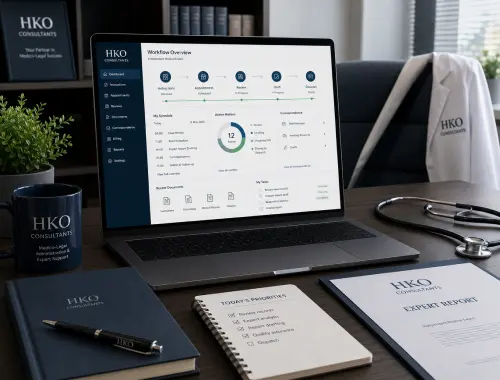
Professional Workflow For Independent Doctors
Independent doctors often need more than clinical expertise to manage medico-legal work smoothly and professionally.
Behind every appointment, report, instruction, and deadline is a workflow that needs careful organisation. For consultants, GPs, and independent medical experts, this can include diary management, correspondence, document handling, appointment coordination, report-flow monitoring, and communication with solicitors or agencies. When this workflow is structured well, doctors can focus more effectively on their expert role while the administrative process remains clear and controlled.
Why workflow matters for independent doctors
Medico-legal work is different from ordinary clinical practice. It often involves formal instructions, sensitive records, strict timescales, claimant appointments, solicitor correspondence, and report requirements that must be handled carefully.
For independent doctors, the quality of the workflow around the case can affect how smoothly the work progresses. A missed document, unclear appointment arrangement, delayed response, or diary conflict can create unnecessary pressure.
A professional workflow helps keep the process organised from the first instruction through to report dispatch. It gives the doctor a clearer administrative structure while protecting their independent expert role.
The doctor’s role must remain independent
In medico-legal work, the doctor or consultant provides the medical opinion. That opinion must remain independent and based on their own professional judgement.
Administrative support should never influence clinical findings, expert conclusions, diagnosis, prognosis, or medico-legal opinion. Its role is to support the process around the expert’s work.
This may include managing correspondence, checking that relevant documents have been received, arranging appointments, organising clinic diaries, chasing administrative updates, formatting reports, and helping the matter progress within the scope of the instruction.
The distinction is important. The doctor owns the opinion. The administrative team supports the workflow.
Common workflow pressures for doctors
Independent doctors often receive work from different routes, including solicitors, medical reporting agencies, or direct professional contacts. Each route may come with its own instructions, documentation, deadlines, and communication expectations.
Without a structured system, the work can become fragmented.
Typical workflow pressures may include:
- Managing multiple clinic dates
- Responding to solicitor or agency correspondence
- Tracking instruction letters and medical records
- Arranging appointments around existing commitments
- Following up on missing documents
- Monitoring report deadlines
- Managing addendum requests
- Handling administrative queries
- Keeping communication clear and professional
These tasks may appear small individually, but together they can take significant time. For busy doctors, a reliable administrative structure can make the overall process more manageable.
Diary organisation supports better case handling
Diary management is one of the most important parts of medico-legal workflow.
Appointments need to be arranged at suitable times, with the correct details confirmed in advance. If a claimant needs to attend in person, location and availability matter. If a remote appointment may be suitable, this should be considered carefully on a case-by-case basis and only where appropriate for the nature of the matter.
Good diary organisation helps reduce scheduling conflicts and avoid unnecessary rearrangements. It also helps doctors maintain a clearer view of upcoming clinics, pending reports, and time-sensitive instructions.
A structured diary is not only convenient. It supports a more professional experience for solicitors, claimants, and the doctor.
Clear communication reduces avoidable confusion
Medico-legal work involves several parties. A solicitor may need an update. A claimant may need appointment confirmation. A medical agency may request progress information. A doctor may need missing records before completing a report.
Clear communication helps keep everyone aligned.
For doctors, this does not mean personally handling every administrative exchange. A medical-secretary-style support team can help manage routine communication, send updates, coordinate documents, and make sure the right information reaches the right party at the right time.
This helps reduce interruptions and allows the doctor to focus on the expert assessment and report.
Document handling needs care and consistency
Medical records and legal instructions often contain sensitive information. They need to be handled carefully, organised properly, and checked for completeness from an administrative point of view.
A professional workflow should support:
- Secure document handling
- Clear file organisation
- Record collation checks
- Instruction tracking
- Correspondence management
- Awareness of deadlines
- Report-flow administration
Administrative checks should focus on process, completeness, formatting, and file readiness. They should not alter or influence the doctor’s expert opinion.
For independent doctors, consistent document handling can reduce time spent searching for information or clarifying what has been provided.
Report-flow management protects time
Once a consultation or records review has taken place, the report process still needs to be managed.
This may include tracking dictation, typing, formatting, administrative checking, sending updates, and dispatching the final report through the correct route. If an addendum or further clarification is requested, this also needs to be logged and handled properly.
A clear report-flow system helps doctors understand what is pending, what has been completed, and what still needs attention. It also helps solicitors receive more organised communication about the status of the instruction.
This does not mean rushing expert work or making unrealistic promises. Report times can depend on case complexity, file readiness, records, and the doctor’s availability. The aim is to manage the process carefully and keep communication professional.
How structured support helps doctors grow medico-legal work
Doctors who want to take on more medico-legal work often need more than referrals. They need the capacity to manage the work properly.
If the administrative process is difficult, time-consuming, or inconsistent, it can limit how much work a doctor can comfortably accept. A structured support system can help create a better foundation for professional growth.
This can be especially valuable for consultants and independent medical experts who want support with clinics, diaries, records, correspondence, and report administration without losing control of their expert role.
The right workflow makes the work easier to manage and helps protect professional standards.
HKO’s administrative role for doctors
HKO Consultants supports doctors and independent medical experts with medico-legal administration, clinic coordination, diary management, correspondence, documentation, and report-flow support.
HKO also works with solicitors who need access to suitable independent experts for claimant-side medico-legal matters. This creates a professional connection between solicitors who need expert input and doctors who need organised administrative support around their medico-legal work.
HKO does not provide medical advice, legal advice, diagnosis, treatment opinion, or expert conclusions. The medical opinion always remains the responsibility of the independent expert. HKO’s role is to manage the administrative pathway with care, clarity, and professionalism.
Building a better professional workflow
A strong professional workflow for independent doctors should make medico-legal work clearer, more organised, and easier to manage. It should support communication, protect time, reduce avoidable admin pressure, and allow doctors to focus on their independent expert opinion.
For doctors, consultants, and independent medical experts across the UK, structured administrative support can make a meaningful difference to how medico-legal work is handled.
HKO Consultants provides professional medico-legal administrative support for doctors who want help managing clinics, diaries, correspondence, documentation, and report workflow. To discuss working with HKO, contact the team with details of your specialty, current medico-legal work, and the type of administrative support you need.